Kemang is the neighbourhood expats in Jakarta talk about most. It is not a formal administrative district, it is the area around Jalan Kemang Raya and Jalan Kemang in South Jakarta, roughly 10 minutes south of Pondok Indah and 15 minutes east of Cilandak. For decades it has been the social centre of expat life in Jakarta. Whether it is still the best place to live is a more interesting question.
The Vibe
Kemang earned its reputation in the 1980s and 1990s when the first wave of expat families moved into the large houses along Kemang Dalam and the surrounding lanes. Restaurants, bars and international services followed. By the 2000s, Kemang was the default answer to "where do expats live in Jakarta?"
That reputation still holds, but with caveats. The nightlife has mellowed, the clubs of the early 2000s have been replaced by craft cocktail bars, wine shops and brunch spots. The social scene has shifted from raucous to relaxed. Galleries like Dia.Lo.Gue Artspace host exhibitions and community events. Furniture stores, boutiques and tailors line the side streets. The Kemang Festival, held annually, draws crowds from across South Jakarta.
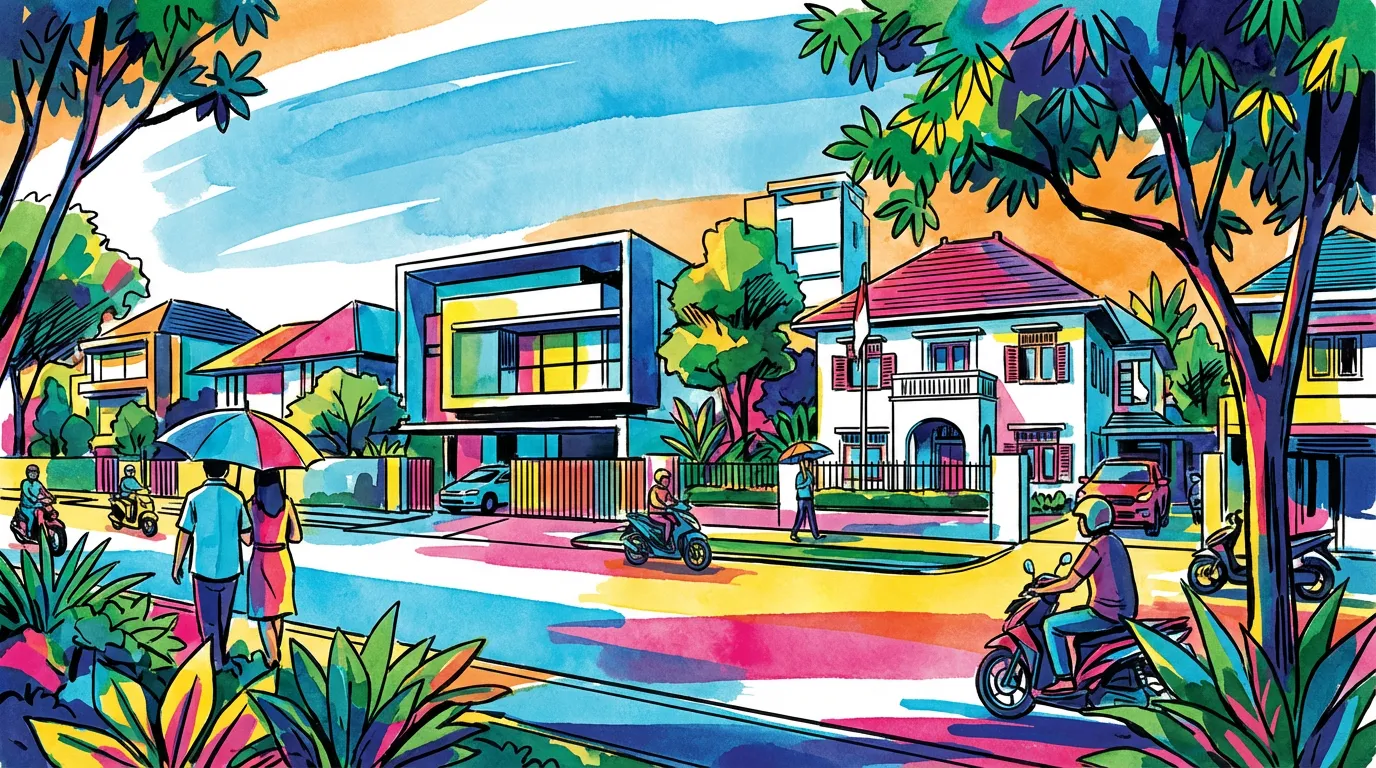
What Kemang still does better than anywhere else in Jakarta is walkability. You can leave your house, walk to breakfast, pick up groceries, get a haircut, eat lunch somewhere different, and be home before the afternoon rain. By Jakarta standards, that is remarkable. Most of the city is built for cars. Kemang is built, imperfectly, unevenly, for people on foot.
The trade-off is density. Kemang is busier, noisier and more congested than Pondok Indah. The main road (Jalan Kemang Raya) is a single carriageway that carries far more traffic than it was designed for. At school-run times and Friday evenings, it crawls. The side streets of Kemang Dalam are quieter, but you are never far from the hum.
Housing
Kemang housing splits into two categories: older freestanding houses and modern apartments.
Kemang Dalam is the residential heart. Streets are narrow and green, shaded by mature trees. Houses here tend to be older, built in the 1980s and 1990s for expat families, with gardens, pools and high walls. Many have been renovated; some show their age. Expect three to five bedrooms, staff quarters, carport, and a compound or standalone layout. Rents range from around $2,000-$4,000 per month for a decent family house, depending on size, condition and whether it has been recently updated. Newer builds on the same streets can reach $5,000+.
Kemang Village is the apartment alternative, a mixed-use development anchored by Lippo Mall Kemang with residential towers above. Units range from studios to three-bedroom apartments. It is convenient, secure, and has a pool, gym and direct mall access. Rents are lower than houses: roughly $1,000-$2,500 per month depending on unit size and floor. For single expats or couples without children, this is the easiest entry point into Kemang.
Lippo Mall Kemang area and the streets running south toward Pejaten offer mid-range options, smaller houses, newer townhouses, and serviced apartments. Less character than Kemang Dalam, but often better maintained and more affordable.
A note on leases: Jakarta landlords typically expect annual payment upfront, not monthly. Some will negotiate quarterly or semi-annual terms, but budget for 12 months' rent at signing. Factor in a security deposit equal to one month's rent. Most expat-standard houses come furnished.
Traffic and Flooding
These are the two things every Kemang resident complains about, and both are real.
Traffic. Jalan Kemang Raya is a bottleneck. One road in, one road out, with every school bus, delivery truck and ride-hail car competing for the same lane. Morning school runs (7:00-8:00) and Friday prayer times (11:30-13:00) are the worst. The flyover at Jalan Pangeran Antasari helps, it connects Kemang to Cipete and the MRT corridor without going through the main drag, but if you are heading north toward Sudirman or east toward TB Simatupang, plan for delays.
Grab and Gojek are the default transport. Most Kemang families have a car and a driver, but use ride-hailing for quick trips. Parking on the main road is limited.
Flooding. Lower Kemang, the area closer to the river, floods during heavy rain, particularly between December and February. In a bad year, water on Jalan Kemang Raya can reach knee height. In a normal year, there may be two or three days of localised flooding that clears within hours. Kemang Dalam sits higher and is less affected, but not immune.
Before signing a lease, ask: does this house flood? Ask the neighbours, not the landlord. If you are looking at ground-floor apartments, check the building's drainage record. Most of South Jakarta has flood-prone pockets, the key is choosing your specific address carefully.
Schools Nearby
Kemang's location puts several international schools within a reasonable commute.
| School |
Distance from Kemang |
Drive time (off-peak) |
Curriculum |
Fee range |
| AIS Jakarta |
In Kemang (Pejaten) |
5-10 min |
Australian + IB DP |
$7,702-$26,308 |
| NZ School Jakarta |
Kemang area |
5-10 min |
NZ Curriculum |
Contact school |
| Lycée Français de Jakarta |
Cipete (adjacent) |
10 min |
French National |
Contact school |
| JIS (Elementary + Middle/High) |
Pondok Indah |
15-20 min |
American + IB DP + AP |
$17,341-$35,916 |
| ISJ |
Pondok Indah |
20 min |
English National |
$8,827-$26,308 |
| SPH Kemang Village |
Kemang |
5 min |
IB (PYP, MYP, DP) |
~$6,900-$20,900 |
Drive times are estimates in normal traffic. At peak school-run times, add 10-20 minutes. Fee ranges are annual totals in USD, see International School Fees in Jakarta for details.
AIS is the obvious choice for families living in Kemang, it is physically in the neighbourhood. The NZ School Jakarta and SPH Kemang Village are also within walking distance for some addresses. JIS is 15-20 minutes via Jalan Pejaten Raya, making Kemang a natural catchment for JIS families who do not want to live in Pondok Indah. ISJ in Pondok Indah is about 20 minutes via the back roads through Cilandak.
For more on school catchments, see Schools Near Pondok Indah and Schools Near Kemang.
Food, Social Life and Services
This is where Kemang wins. No other neighbourhood in Jakarta concentrates this much for expats within a 10-minute walk.
Restaurants. Kemang's dining scene ranges from high-end Japanese (Enmaru, Sushi Tei) to Italian trattorie, Vietnamese pho, Middle Eastern grill houses, Mexican cantinas, and the Indonesian staples, padang, soto, nasi goreng, available at every price point from street cart to sit-down. The density of options per square kilometre is unmatched in South Jakarta.
Cafés and co-working. Kemang has more independent coffee shops than any neighbourhood in Jakarta. They double as meeting spots, co-working spaces and weekend hangouts. Several offer reliable wifi and air conditioning, a genuine differentiator.
Bars. The scene is calmer than it used to be. Eastern Promise is an institution. Several wine bars and craft beer spots have opened in recent years. Kemang is no longer Jakarta's party centre, that has moved to SCBD and Senopati, but it still has more walkable evening options than Pondok Indah or Cilandak.
Groceries. Kemang Village mall has a well-stocked supermarket. Ranch Market and other premium grocers are within a short drive. For imported goods, European cheeses, Australian beef, Japanese ingredients, Kemang is well served.
Services. International clinics (SOS Medika Kemang is the main one), dental practices, tailors, salons, pet groomers, yoga studios (Union Yoga), gyms (Celebrity Fitness at Kemang Village), and a Dia.Lo.Gue Artspace that functions as a community gallery and event space. The French bakeries along Jalan Cipete, technically next door to Kemang, are excellent.
Healthcare
SOS Medika Kemang is the primary international clinic in the area, 24-hour emergency service, English-speaking doctors, and direct billing to most international health insurers. It is on Jalan Kemang, five minutes from most Kemang addresses.
Brawijaya Hospital (Jalan Cipete Raya) is a short drive south, a full-service hospital with maternity, paediatrics and specialist departments. Not as internationally oriented as SOS Medika, but well-equipped.
For specialist care or anything requiring a major hospital, Pondok Indah Hospital (15 minutes) and Siloam Hospitals TB Simatupang (10 minutes) are the nearest large facilities. Both are accredited and used regularly by expat families.
Dental care is well covered, several international-standard dental practices operate in Kemang and Cipete.
Who Kemang Suits: And Who It Doesn't
Kemang is a strong choice if
- You want to walk to restaurants, cafés and services, not drive to a mall for everything
- You value community and social life. Kemang has the densest expat network in Jakarta; you will see people you know on the street
- Your children attend AIS, NZ School, JIS, or SPH Kemang Village, the commute is short
- You are a couple or young family who wants energy and convenience over space and silence
- You prefer older houses with character (gardens, pools, mature trees) over new-build compounds
Kemang is a weaker choice if
- You need a large, modern house in a quiet gated compound, Pondok Indah and Cilandak do this better
- You prioritise wide streets and easy driving. Kemang's roads are narrow and congested
- You are sensitive to noise. Jalan Kemang Raya has motorbike and truck traffic from early morning
- Flooding anxiety is a deal-breaker. Lower Kemang does flood, and when it floods, it disrupts everything for a day or two
For the comparison, see our Living in Pondok Indah guide. For a city-wide overview, see Best Areas in Jakarta for Expat Families.
Ready to explore?